We may earn a commission through affiliate links, at no separate charge from VerdictSift. Ordinary manufacturer links are also included. How our links work.
For relaxed car camping, prioritize a comfortable rim, stable base and easy cleaning. Insulation is useful when you sip slowly; lightweight simplicity helps when you carry everything farther.
Your options, at a glance
Start with the way you will use it, then decide which compromise makes sense.
| Option | A good fit for | The tradeoff |
|---|---|---|
| Insulated handled mug | Slow sipping near the car | More bulk and weight |
| Lightweight simple cup | Compact packing and quick drinks | Less temperature retention |
| Sealed travel container | Carrying a drink where permitted | More lid parts to clean |
Choose for the way you drink
Some people finish coffee while making breakfast; others carry the same cup around for much longer. That difference matters more than a rugged-looking finish. An insulated mug may suit slow sipping, while a simple cup can be enough when you drink promptly and refill often.
Think about whether the mug stays at a table or travels in a bag. A sip lid can reduce splashes but should not be assumed leakproof. If you need to put a full drink inside luggage, look for a product specifically designed and rated for that use rather than treating any lid as a seal.
Try the rim and handle
The rim is where the product meets your everyday routine. Its thickness, shape and finish affect how pleasant it is to use. A handle should fit your grip comfortably and leave enough room for the way you hold the mug. If you often wear gloves outdoors, consider that too.
Some travel-style cups fit a vehicle holder but feel less natural around a campsite table. Others have broad handles that are comfortable but take up more packing space. Neither design is universally better. Choose for your main setting instead of expecting one cup to serve every situation perfectly.
Understand the material tradeoffs
Different materials change weight, heat handling, durability and cleaning. Read the manufacturer's instructions for the exact mug rather than applying a general rule to every metal, plastic or coated product. In particular, do not place a mug on a heat source unless its maker explicitly allows that use.
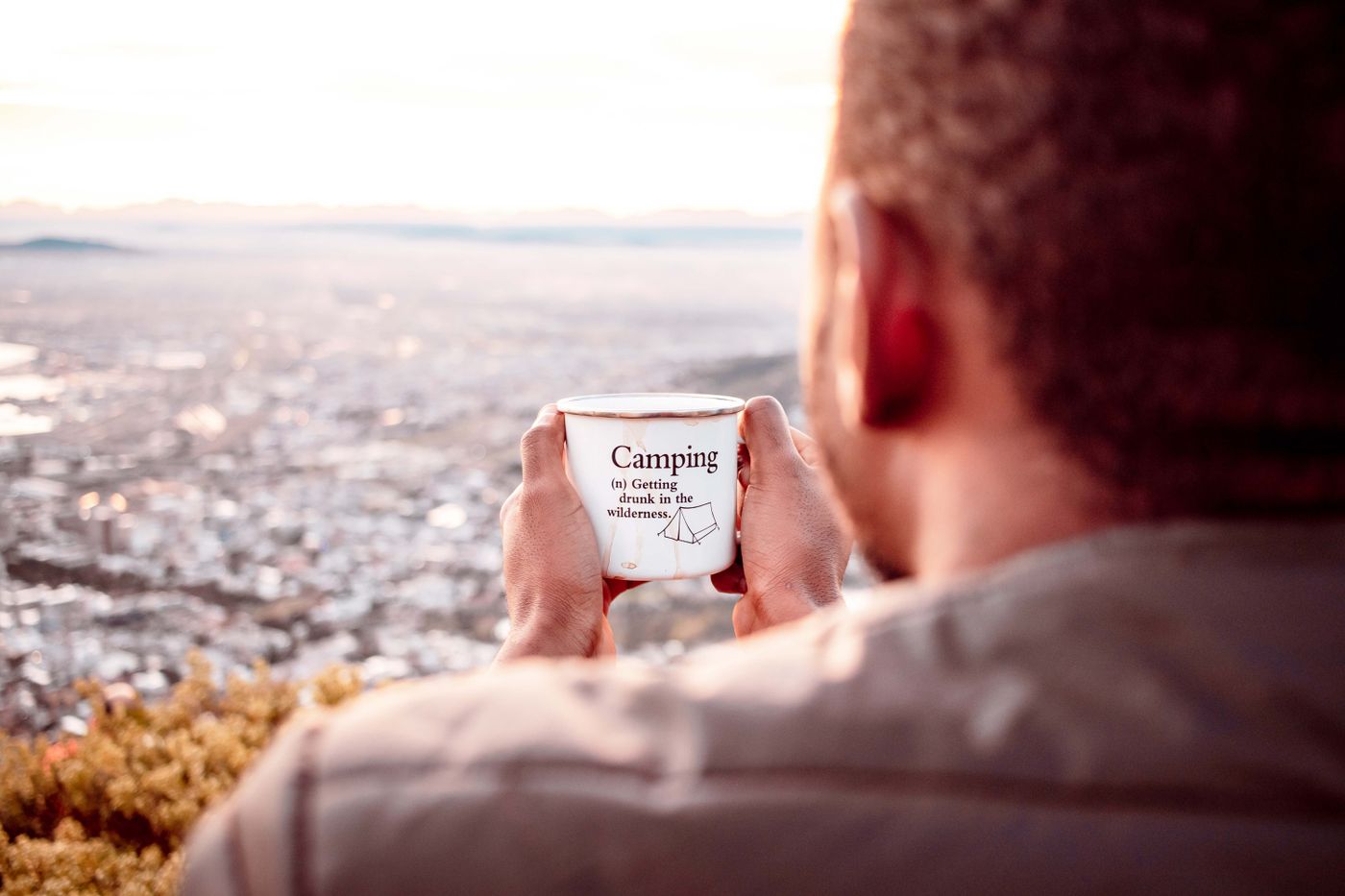
A lightweight cup can be attractive for carrying, while a heavier insulated model may be worthwhile close to the car. Decorative enamel finishes can look appealing, but inspect care guidance and how to handle damage. The practical decision should include the whole routine, not only the appearance of an empty cup.
Check lids and small parts
A simple lid can be easier to clean than one with several moving pieces. If a valve or gasket comes out, make sure it can be removed and replaced as instructed. Small components are easy to misplace at a campsite, so consider whether replacement parts are available.
Check the opening size for a brush or your normal washing method. Coffee residue can collect around seals and channels that are not obvious from the outside. An easy-clean design is valuable because it makes a useful habit less troublesome after an outing.
Buy the capacity you actually want
A large mug can hold more, but it also takes more room and may encourage you to carry a drink longer than you enjoy it. Compare capacity with your ordinary serving rather than assuming bigger means more versatile. Allow room at the top for handling and any added milk or other ingredients.
If several people share camping equipment, distinguish mugs in a simple way. Different colors or removable labels may be enough. Buying an enormous matching set makes little sense if only two mugs regularly leave home. Start with the number you need and replace individual pieces when appropriate.
Choose a useful everyday overlap
A mug that also works for your porch, garden or ordinary morning routine may earn more use than a highly specialized camping accessory. Test how it sits on a table and how it cleans before deciding whether its extra features are worthwhile.
Our starting recommendation for car camping is a comfortable, stable cup with straightforward care. Choose insulation for a demonstrated need, not as a default upgrade. For longer carries, weigh the comfort benefits against the extra bulk. A good mug should make a quiet morning easier, without adding a complicated maintenance routine.
Common questions
Is every lidded mug leakproof?
No. A sip lid may only reduce splashes. Check the manufacturer's stated use before placing a full mug in a bag.
Can a metal mug go directly on a stove?
Only when the manufacturer explicitly allows it. Insulated or coated mugs may have different limitations.
Sources & further reading
This guide combines practical shopping considerations with information from the sources below. It does not represent hands-on product testing.
Source review: November 20, 2026. Product designs and seller terms can change.
Send a correction or a question