We may earn a commission through affiliate links, at no separate charge from VerdictSift. Ordinary manufacturer links are also included. How our links work.
Choose a lightweight washable laundry pouch with enough room for your actual trip. Keep damp clothing separate and deal with it promptly rather than relying on a sealed bag to solve the problem.
Your options, at a glance
Start with the way you will use it, then decide which compromise makes sense.
| Option | A good fit for | The tradeoff |
|---|---|---|
| Light washable fabric pouch | Ordinary dry worn clothing | Needs cleaning and drying between trips |
| Mesh laundry bag | Visibility and simple laundry workflows | Does not contain moisture or residue |
| Coated pouch | Short-term separation where appropriate | Care instructions and ventilation need attention |
Plan for the return journey
The first day of a trip is easy to organize because everything is clean and folded. By the last day, clothing has been worn, shoes have changed places and the suitcase no longer resembles the neat packing photo. A laundry bag gives those worn items a clear destination.
Start with the amount of laundry you expect between opportunities to wash it. A huge sack can consume most of a small case, while a tiny pouch may be full after one day. Consider whether you need one shared bag or separate pouches for different travelers. Clear ownership can save time when unpacking at home.
Distinguish worn clothing from wet clothing
A normal laundry pouch is useful for separating dry, worn garments from clean ones. It should not be assumed suitable for storing wet swimwear or a damp towel indefinitely. Moisture changes the problem, and sealing it away does not make the contents dry.
If you need to transport damp items briefly, choose an appropriate separate container and follow care instructions for both the items and the bag. Empty it promptly when you can. The practical habit matters more than a marketing claim about odor control. Do not let a convenient pouch become a reason to forget what is inside.
Choose material around care and visibility
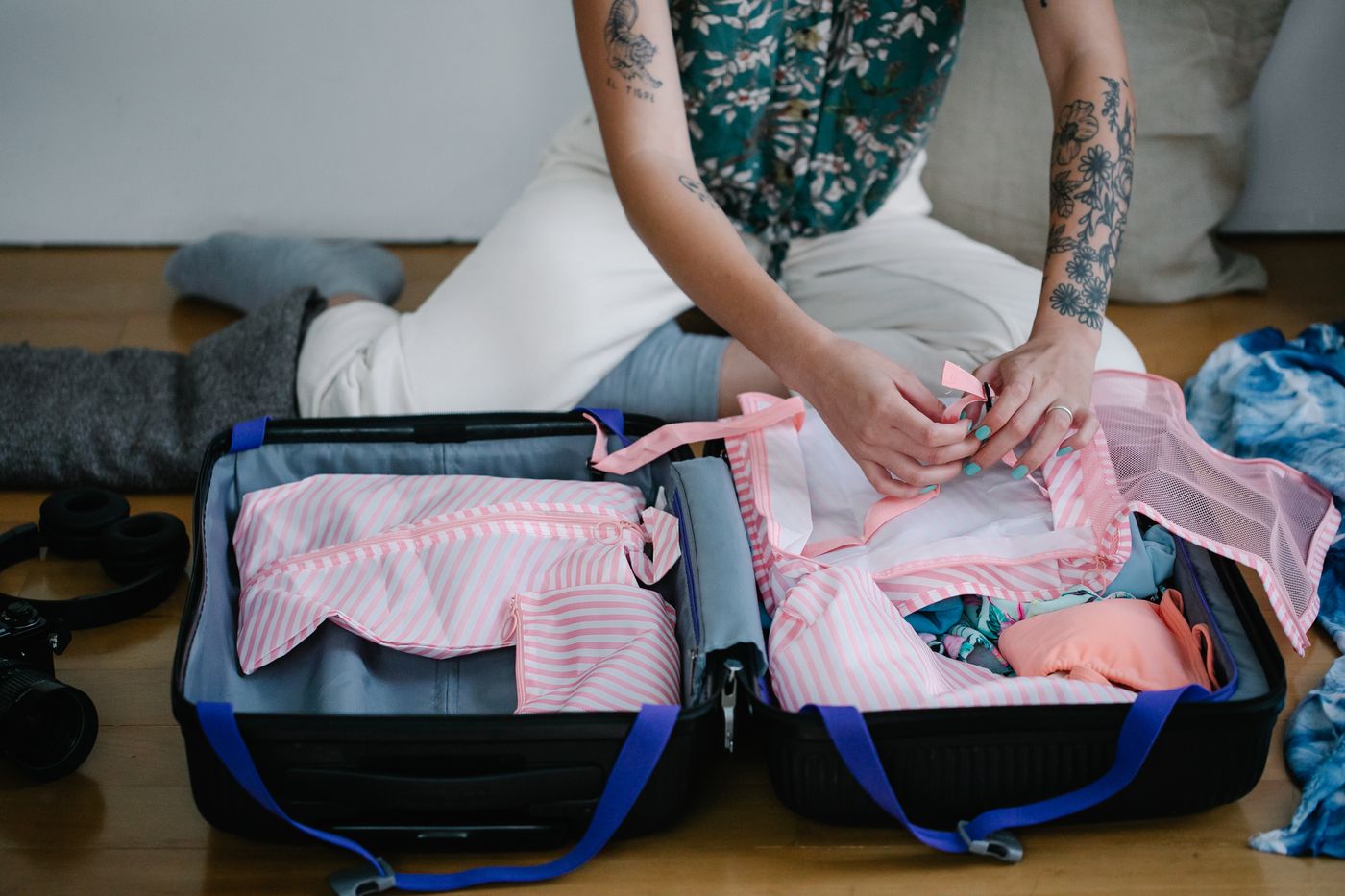
A washable fabric bag is a simple option for ordinary clothing. Mesh makes it easy to see the contents and may suit a laundry workflow, but it does not separate residues or liquids from neighboring belongings. Coated fabric can be easier to wipe, though the care routine may differ.
Read washing instructions before purchase. Some organizers can be washed with clothing; others need wiping or hand cleaning. A bag that fits your normal routine is more likely to stay useful. Avoid assuming all lightweight synthetic pouches tolerate the same temperature, detergent or drying method.
Look at the opening and closure
A broad opening makes it easier to add a folded shirt or remove everything at once. Drawstrings are simple and flexible, while zippers can keep small items contained more securely. Neither closure should be treated as proof of waterproofing.
Consider how you will use the bag in a room. A hanging loop can keep it off a crowded floor, but it needs a suitable support. If you leave the pouch inside a suitcase, a low-profile shape may be more valuable than a large handle. Buy for the place it will actually live during the trip.
Do not let separation become extra bulk
A heavily padded laundry organizer rarely offers much advantage for ordinary clothes. Several small compartments can also make it harder to fit an uneven load. A flexible pouch adapts as clean clothing leaves one part of the suitcase and worn clothing fills another.
You may already own a washable bag that performs this job. Test it before buying a dedicated travel product. The important features are sufficient capacity, manageable care and a closure that works for your belongings. Matching colors across every travel organizer are optional; easy identification is more useful.
Build a simple unpacking habit
When you return, remove the laundry pouch first and empty it into the appropriate washing process. Check pockets, follow garment labels and clean the organizer as needed. Let it dry completely before storing it with your luggage. This prevents the bag from disappearing into a cupboard with forgotten contents.
For most short trips, our practical choice is one lightweight pouch for dry worn clothing and a separate plan for damp items. Choose more elaborate separation only if your routine needs it. The best laundry bag makes both the trip and the first evening home a little easier.
Common questions
Can I put wet swimwear in a regular laundry bag?
Do not assume it will contain moisture. Use an appropriate separate solution and remove damp items promptly.
Do I need one for each traveler?
Separate pouches can simplify sorting, but one appropriately sized shared bag may be enough for a short trip.
Sources & further reading
This guide combines practical shopping considerations with information from the sources below. It does not represent hands-on product testing.
Source review: November 20, 2026. Product designs and seller terms can change.
Send a correction or a question